Earth and Environmental Sciences
Interested in the study and protection of our environment?
The geologic history and future of the Earth? The oceans? All of the above?
UMW’s Department of Earth and Environmental Sciences is the place to learn about all aspects of the Earth sciences and our role in living with the Earth’s resources and limitations. We offer a B.S. in Environmental Science and Geology, with the following concentrations to help you focus on your individual goals:
- Applied Environmental Science
- Environmental Sustainability and Policy
- Geology
- Environmental Geology
- Minor in Environmental Sustainability
Explore our site for more information, and follow us on Facebook and Instagram.
Recent News From Our Students and Faculty
Dr. Grothe Recieves Waple Faculty Award For Professional Achievement
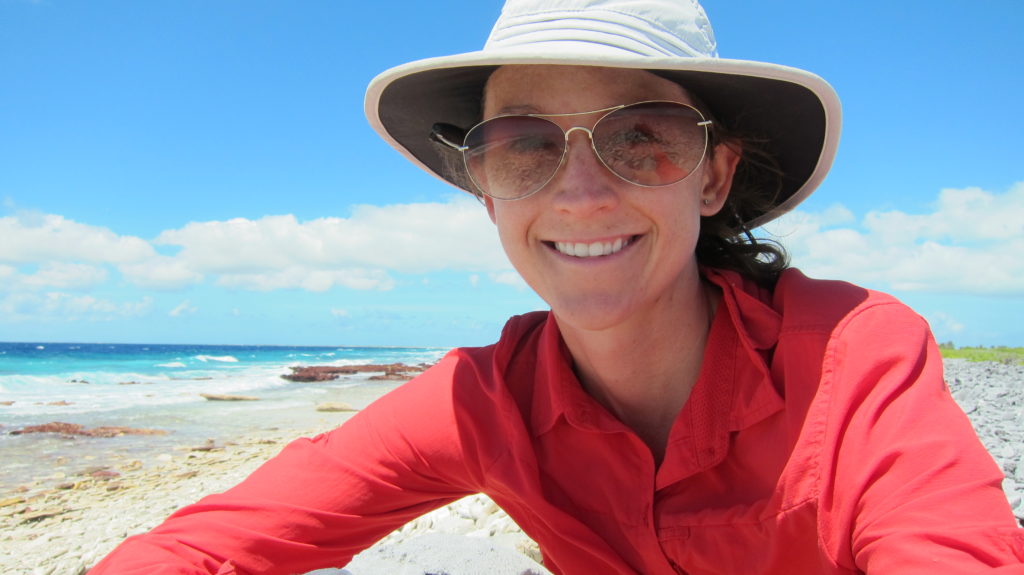
We are delighted to announce that Dr. Pamela Grothe has won the Waple Faculty Award for Professional Achievement. Established in 2013, the Waple Faculty Award for Professional Achievement recognizes the significance and impact of a faculty member’s scholarly, creative and professional accomplishments. Dr. Grothe’s research focuses on using the geochemistry from carbonate proxies, such as corals and mollusk shells, to reconstruct the climate over the last several hundred to thousands of years. She has recieved signfiicant external funding, mentored dozens of research students, and contributed to a number of campus initiatives including the UMW Climate Action Task Force and the President’s Council for Sustainability. Congratulations Dr. Grothe!
EESC Students Win Big At CPRC SETAC
Three EESC students and their research mentor Dr. Tyler Frankel (Assoc. Professor- EESC) attended the CPRC SETAC Annual Spring Conference held on April 9th at Towson University. Hannah Reents (EESC ’26) was awarded 1st place in the poster competition for her presentation titled “Initiation of a long-term study to track fecal coliform contamination in the Rappahannock River and share results with scientific community”. Garrett Driscoll (EESC ’28) received 2nd place in the poster competition for his presentation entitled “Assessing the effects of lead and cadmium contaminated sediments on viability and locomotor behavior in the amphipod Hyallela azteca“. Joey Gasink (EESC ’26) won3rd place in the platform competiton for his talk titled “Evaluating embryonic development, locomotor behavior, and bioaccumulation in cadmium exposed Planorbella duryi snails under SSP-RCP warming scenarios”. Both poster and platform competitions included undergraduate students, Masters students, and Ph.D. candidates. Congratulations to our students!

EESC Students Attend American Geophysical Union’s Ocean Sciences Meeting in Glasgow, Scotland
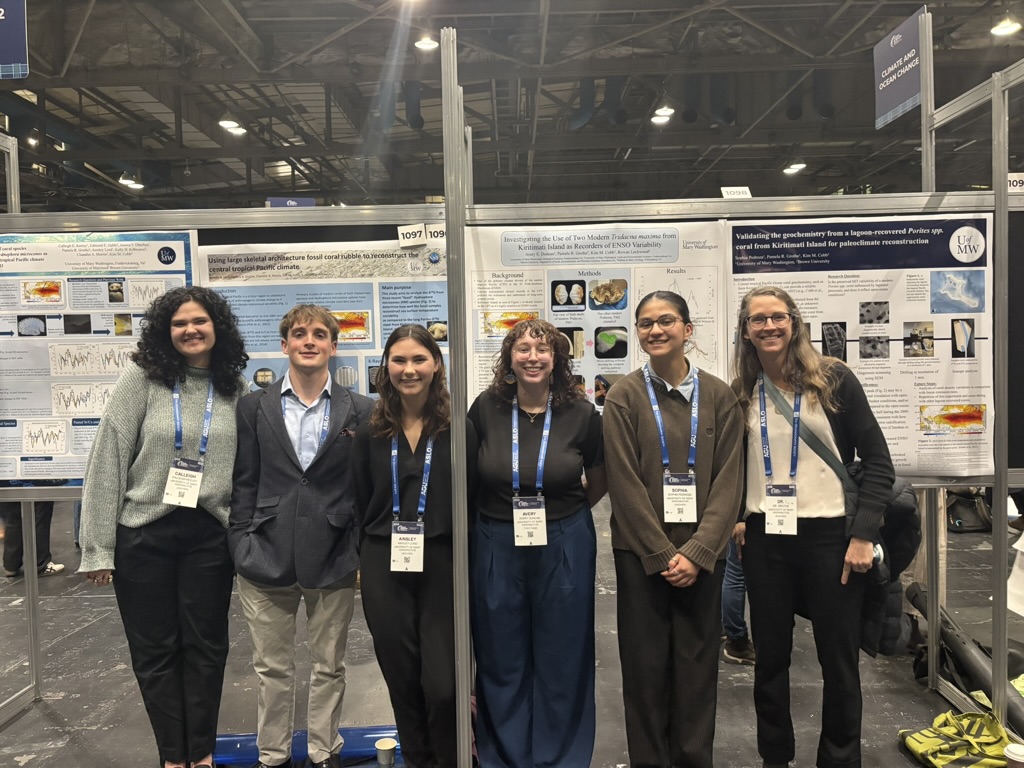
Five EESC research students and Dr. Pamela Grothe attended the American Geophysical Union’s Ocean Sciences Meeting in Glasgow, Scotland, from Feb. 22 – 27 to present their undergraduate research projects. Dr. Grothe and the students are reconstructing climate conditions in the tropical Pacific using geochemistry from coral skeletons and clam shells. They presented four posters, ranging from testing new coral and clam species as climate recorders to using fossil samples to reconstruct past climate conditions before instrumental records.
EESC Student Wins Goldwater Scholarship
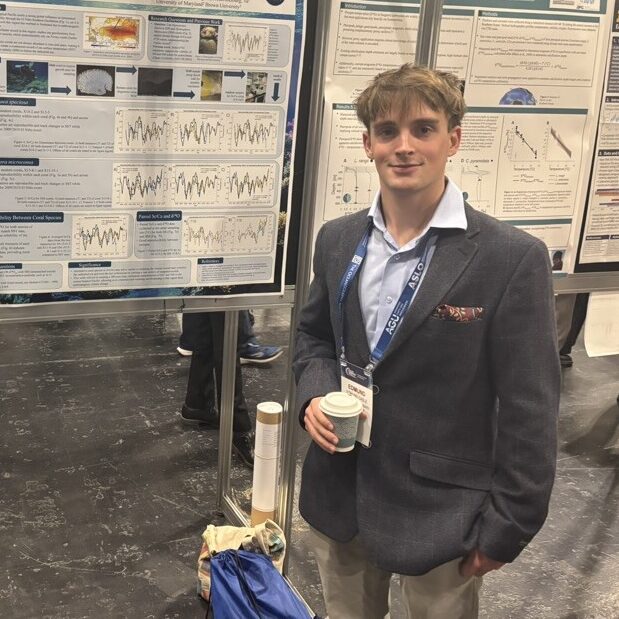
Congratulations to Ned Gable (Environmental Science and Chemistry 27’) for being awarded the Goldwater Scholarship, the most prestigious award for undergraduates in STEM. Ned is working with Dr. Grothe on cutting-edge research, testing new coral species and techniques to reconstruct past climate conditions. His first project included testing the geochemistry of a new coral species as a sea surface temperature recorder. He presented that work at the American Geophysical Union’s Ocean Sciences Meeting in Glasgow, Scotland. His current project supports Dr. Grothe’s Waple Fellowship, leading an emerging technique using ICP-MS (Inductively Coupled Plasma Mass Spectrometry) to analyze trace elements more accurately in corals to reconstruct sea surface temperatures (SSTs).
EESC Students Represent at the Soil Science Society of America’s National Meeting
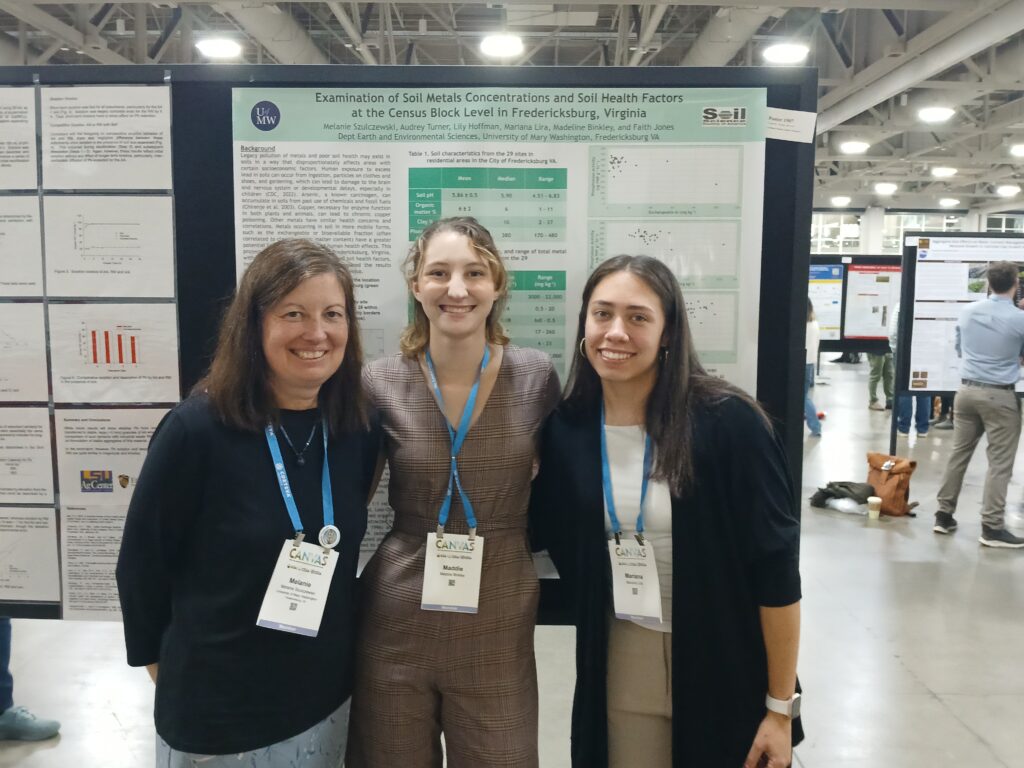
Dr. Melanie Szulczewski (left, Professor, EESC) and two of her undergraduate research students, Madeline Binkley (middle, ’28), and Mariana Lira (right, EESC’26), presented their work at the Soil Science Society of America’s annual meeting in Salt Lake City, Utah on Nov. 12th, 2025. Their poster titled “Examination of Soil Metals Concentrations and Soil Health Factors at the Census Block Level in Fredericksburg, Virginia” examines soil metals and health in Fredericksburg, VA at the census block level to link land use and contamination.
EESC Student Success at Irene Piscopo Rodgers ’59 Summer Science Institute
We are pleased to share that three EESC students were selected to receive awards during the 2025 Irene Piscopo Rodgers ’59 Summer Science Institute Research Symposium. Mentored by Dr. Tyler Frankel (Associate Professor- EESC), Joseph Gasink (EESS) received first place for his poster presentation “Applying climate change models to improve traditional exposure testing using adult and embryonic Seminole Ramshorn (Planorbella duryi) snails.” Summer Orledge (EESC), also mentored by Dr. Frankel, received second place for her poster presentation “Assessing the presence and concentration of trace metal contamination around an unlined landfill in King William County, VA.” Mentored by Dr. Ben Kisila (Professor- EESC), Eric Torres (EESC) won second place platform presentation for his talk entitled “Spatial, temporal and ecological impact analysis of trace metals enrichment in a Central Appalachian coal mining watershed.”
“Without the generous support of Dr. Perkins and Mrs. Rodgers, I wouldn’t have become the researcher I am today,” said Joey, who studied freshwater snails exposed to environmental contaminants and extreme heat to understand how other living organisms might be affected.”
“It’s rare for students to engage in this level of research as undergraduates,” said Summer, who honed skills in field sampling and processing, instrumentation, statistical analysis, writing, and more. “It was labor intensive but prepared me well for graduate school.”
“Seeing alumni in medical and graduate school and those already practicing careers in medicine who were in the same program helped instill the confidence that this was a sustainable future for me,” said Eric, who plans to pursue a Ph.D. “I want to thank donors for supporting a program that gives budding scientists a tremendous opportunity to engage in meaningful research.”
Congratulations to our students and faculty mentors! Read more about it!
EESC Major Wins Award for Academic Achievement During UMW Commencement
We are pleased to share that Jessica Oberlies (EESC) was selected as a recipient for a Colgate W. Darden Jr. Award for Academic Achievement which is bestowed upon students who complete their degrees with the highest grade-point average in the undergraduate program. Majoring in Environmental Science and Spanish, Jessica graduated UMW with a 4.0 GPA while competing on UMW’s cross country and track and field teams and was selected for the C2C All-Academic team and the UMW Athletic Honor roll. She was a participant in the UMW Summer Science Institute program under the mentorship of Dr. Pamela Grothe (Associate Professor- EESC) where she collected samples of ancient corals for research on climate change. Based on her experiences at UMW, she is now implementing her scientific knowledge, field experiences and international adventures as a coastal resource volunteer with the Peace Corps in the Philippines. Congratulations Jessica!
Read more about Jessica and other Colgate W. Darden Jr. Award for Academic Achievement winners.
Frankel Receives Funding From Ernst & Young Foundation
Dr. Tyler Frankel (Associate Professor- EESC) has received $20,000 in support from the Ernst Young Foundation to conduct research examining the impacts of munitions testing on the Potomac River in partnership with the Potomac Riverkeeper Network. The funding is being used to support four undergraduate fellowships on the UMW campus that will allow selected students to participate in high-impact research. This work includes collaborations with the Chemistry (Dr. Sarah Smith- Assistant Professor) and Geography (Dr. Stephen Hanna- Professor) departments.
EESC Faculty Receives EPA Region 3 Thriving Communities Grant
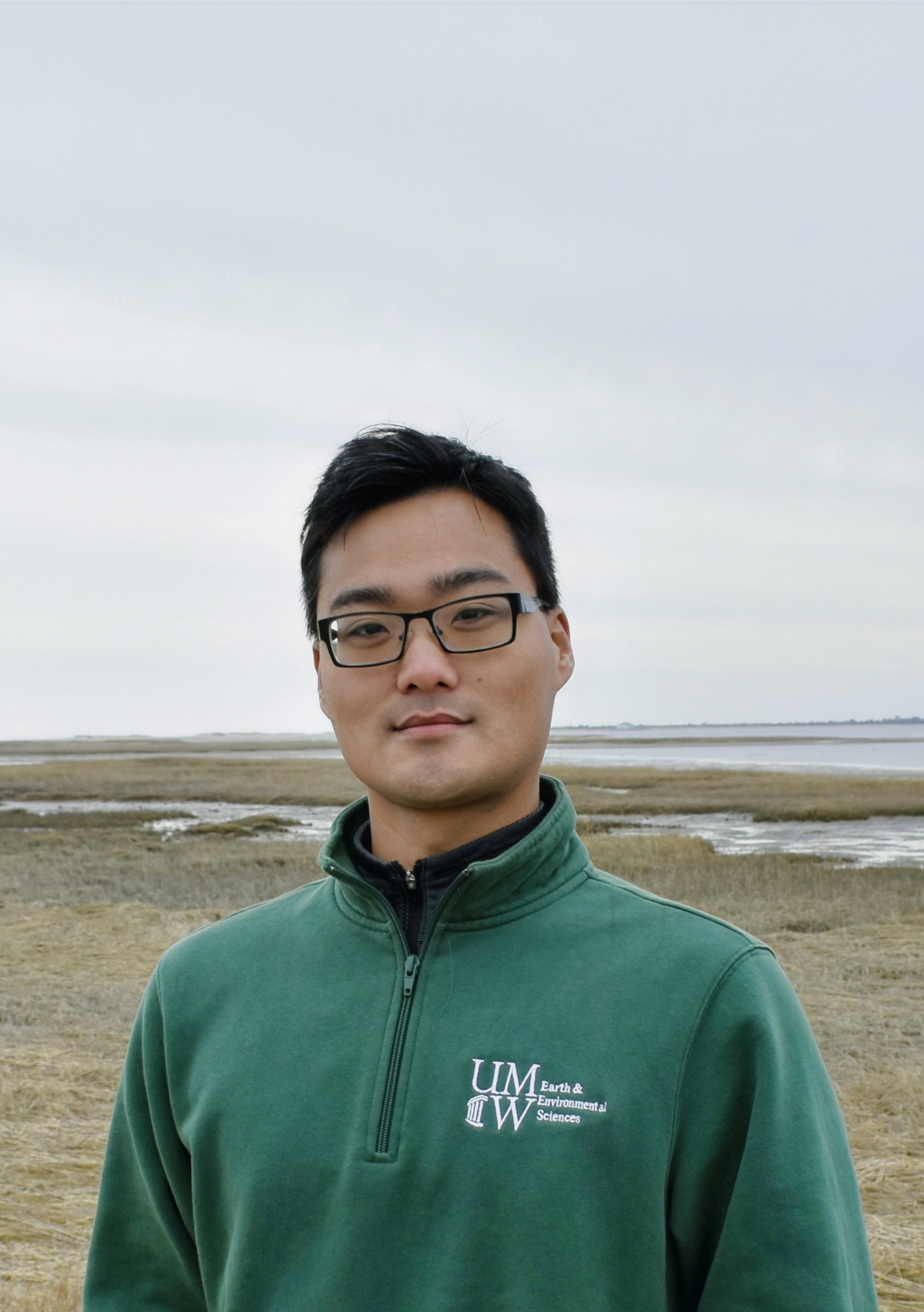
We are pleased to announce that Dr. Tyler Frankel (Assoc. Prof- EESC) has received a $139,281 grant from the EPA Region 3 Grantmaking Program administered through the Green and Healthy Homes Initiative. The provided funds will be used to support environmental contamination assessment and future landfill cleanup efforts on the Mattaponi Native American reservation in partnership with the Eastern Woodlands Revitalization, a non-profit organization dedicated to promoting the revitalization of traditional knowledge and practices of eastern woodland tribal communities. This work will also include an assessment of contamination loads in American shad, an ecologically important migratory fish that has been impacted by human activities and serves as a culturally important species for the tribe.
Soil Chemistry Research Presented at National Conference
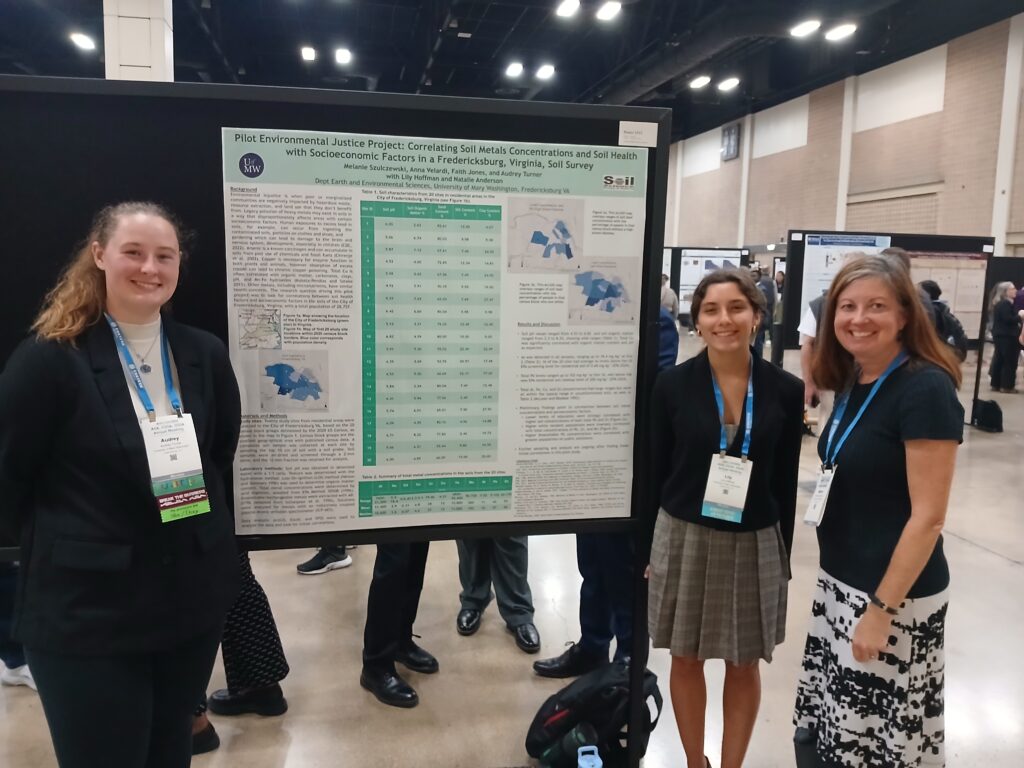
Dr. Melanie Szulczewski (Professor, EESC) and two of her undergraduate research students, Audrey Turner (’25) and Lily Hoffman (’27), presented their work at the Soil Science of America annual meeting in San Antonio, Texas, in November 2024. They are conducting a soil survey of trace metals and overall soil health in Fredericksburg VA residential soils.
Alumni In The News
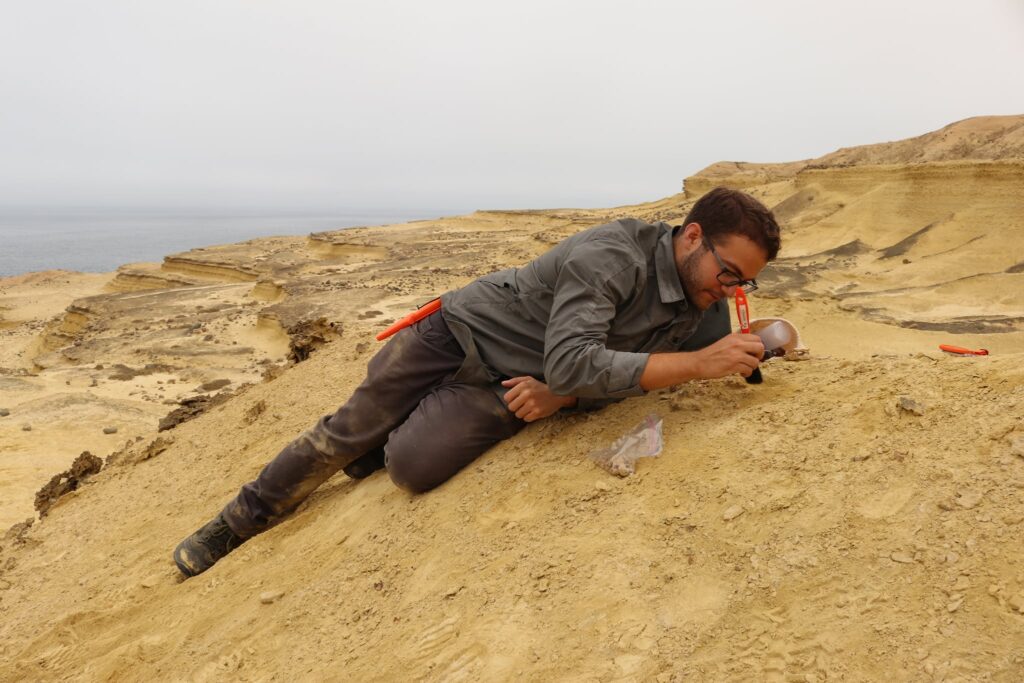
Miguel Marx has been very successful since graduating from UMW in 2017 with a Geology degree. He continued his education, getting a Master’s Degree in Paleontology in Portugal, and is now a PhD Candidate in Sweden. He also just shared his most recent research, entitled “Skin, Scales, and Cells in a Jurassic Plesiosaur” in Current Biology and was also recently reported in the New York Times.
In Memory of Dr. Michael Bass
It is with great sadness that we share the passing of Professor Emeritus of Environmental Science and Biology Michael Bass.
Michael retired from UMW in 2018, having served Mary Washington for more than 45 years. He earned his Ph.D. in 1976 from Virginia Polytechnic Institute and State University and joined Mary Washington after a few years in research positions.
At Mary Washington, Michael was the driving force to build the environmental science program and was the first Chair of the new Department of Environmental Science and Geology (now Department of Earth and Environmental Sciences). He also partnered with the City of Fredericksburg and Spotsylvania County on a variety of projects concerned with monitoring water quality, stream bank erosion and the impact of construction projects on bodies of water such as Massaponax Creek and the Ni River. He also helped to design the retention ponds that are a notable feature of the Central Park development in Fredericksburg. He often involved his students in field-work, enabling them to present their findings at regional and national conferences. A new species of caddisfly, Hydropsyche bassi, was also named after him based on his contributions to the field.
Graduates recall his impact on their work and honored him with the Class of 1972 Dr. Michael Bass Scholarship to create opportunities for talented students with financial need to pursue undergraduate research in the sciences. When the Dr. Michael Bass scholarship was established, donors wrote notes detailing how he influenced their careers and expressing their gratitude. Many of his former students kept in touch with him through the years, and often came to visit when they were in town.
A memorial service was held on Feb. 1st, 2025. Attended by family, friends, colleagues, and alumni, the stories that were shared clearly showed how integral Dr. Bass was to both the UMW community and the wider DMV area.

EESC Students Represent and Win Big at SETAC North America
Three EESC undergraduate students, mentored by Dr. Tyler Frankel (Assoc. Professor, EESC), presented at the Society of Environmental Toxicology and Chemistry North America 45th Annual Meeting which was held in Fort Worth, TX from Oct. 20th – Oct. 24th, 2024.
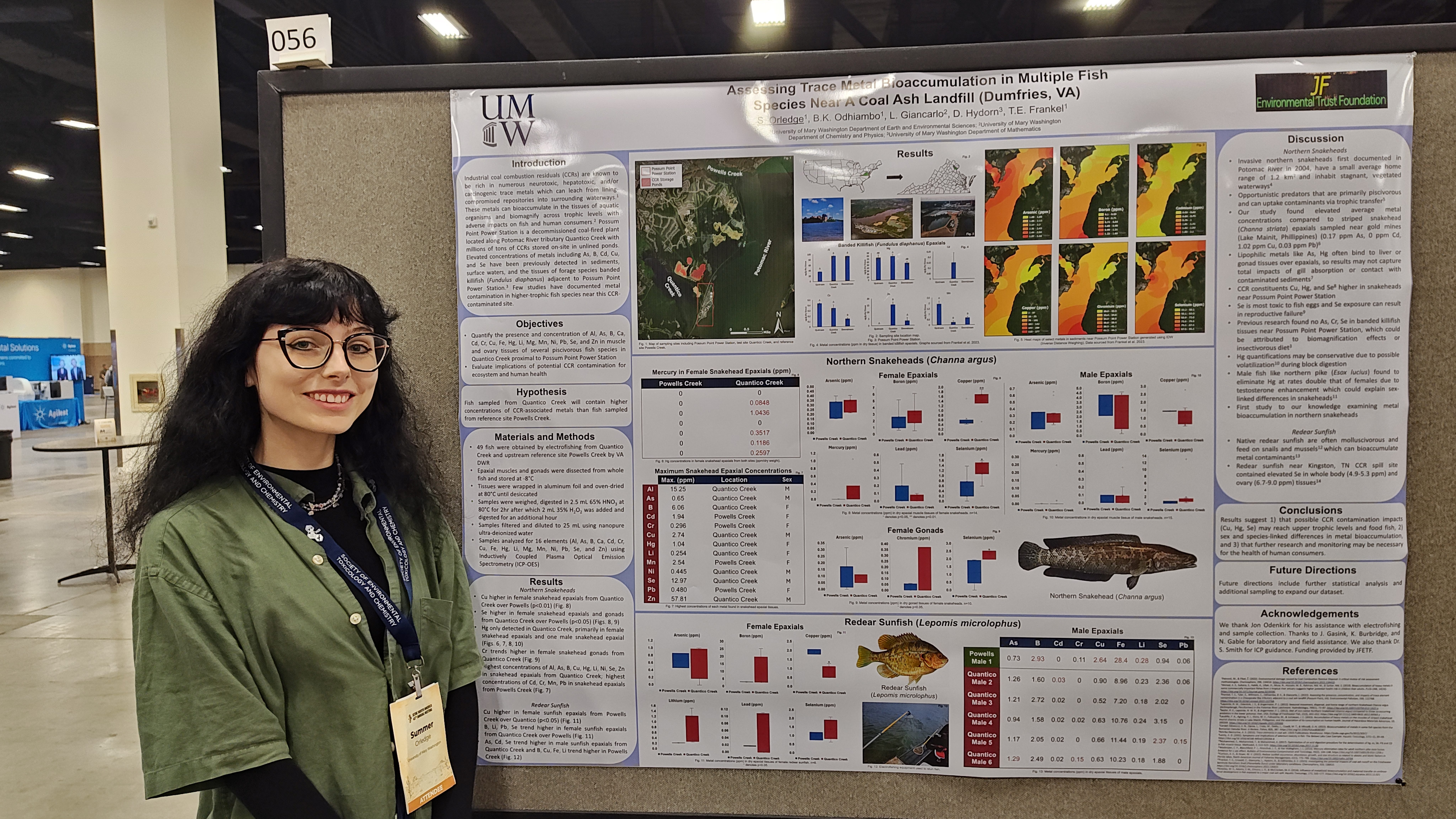
Summer Orledge (EESC, 25′) presented two abstracts entitled “Assessing Trace Metal Bioaccumulation in Several Fish Species Near A Coal Ash Landfill (Dumfries, VA)” and “The Presence, Concentration, and Potential Ecological Impacts of Trace Metal Contaminants in the James River Near Multiple Anthropogenic Contamination Sources (Bremo Bluff, VA)”. Additionally, she was the recipient of the Best Undergraduate Presentation Award which included 300 competitors from both USA and international Colleges and Universities.
Edmund Gable (EESC, 27′) presented an abstract entitled “Assessment of Trace Metals and Polyfluoroalkyl Chemicals in Sediment, Water, and Fish Tissues Collected from Mattawoman Creek (Charles County, MD)”.

Joseph Gasink (EESC, 26′) presented two abstracts entitled “Assessing the Presence, Concentration, and Biological Uptake of Trace Metals and PFAS Near the Dahlgren Naval Support Facility (Dahlgren, Virginia)” and The Effects of Cadmium Exposure in the Presence of Climate Change on Embryonic Development in the Seminole Ramshorn Snail (Planorbella duryi)”.

Congratulations to our fantastic students!

EESC Students Present at Chesapeake Watershed Forum
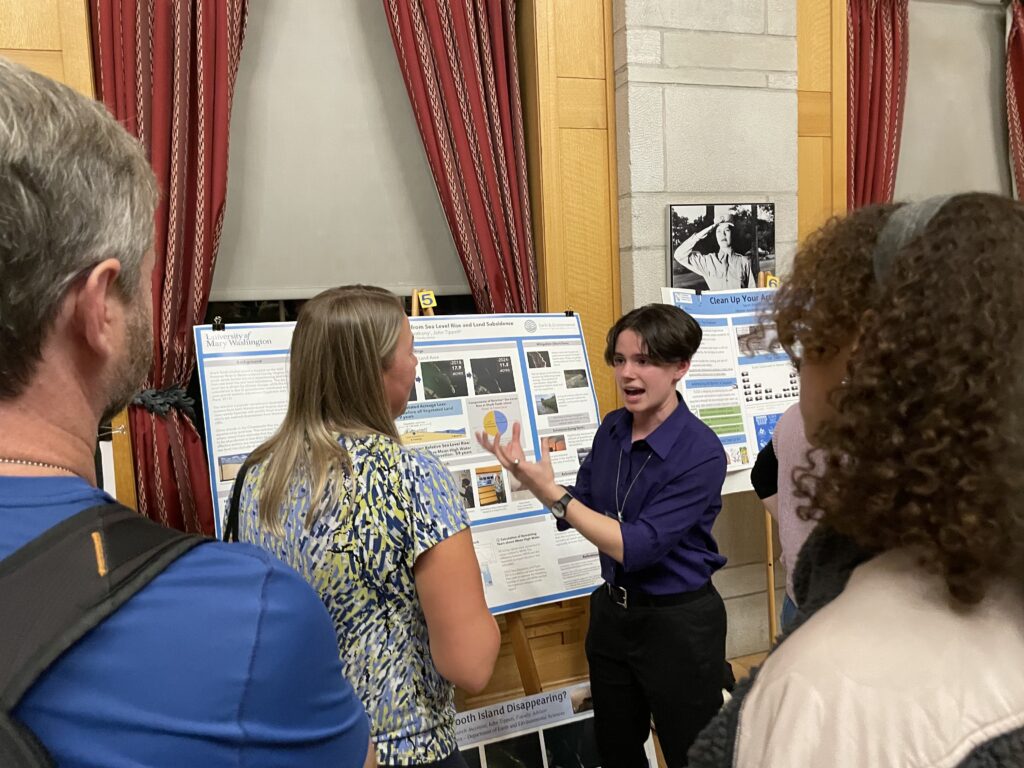
Kate Stoneman and Holly Anthony present their research posters at the Chesapeake Watershed Forum in Shepherdstown, West Virginia. Kate researched the effects of sea level rise and land subsidence on Shark Tooth Island in the lower Potomac. Holly’s research looked that the biodegradation of PHA plastic in different aquatic systems.

Geology Major Co-Authors U.S. Geological Survey Data Release
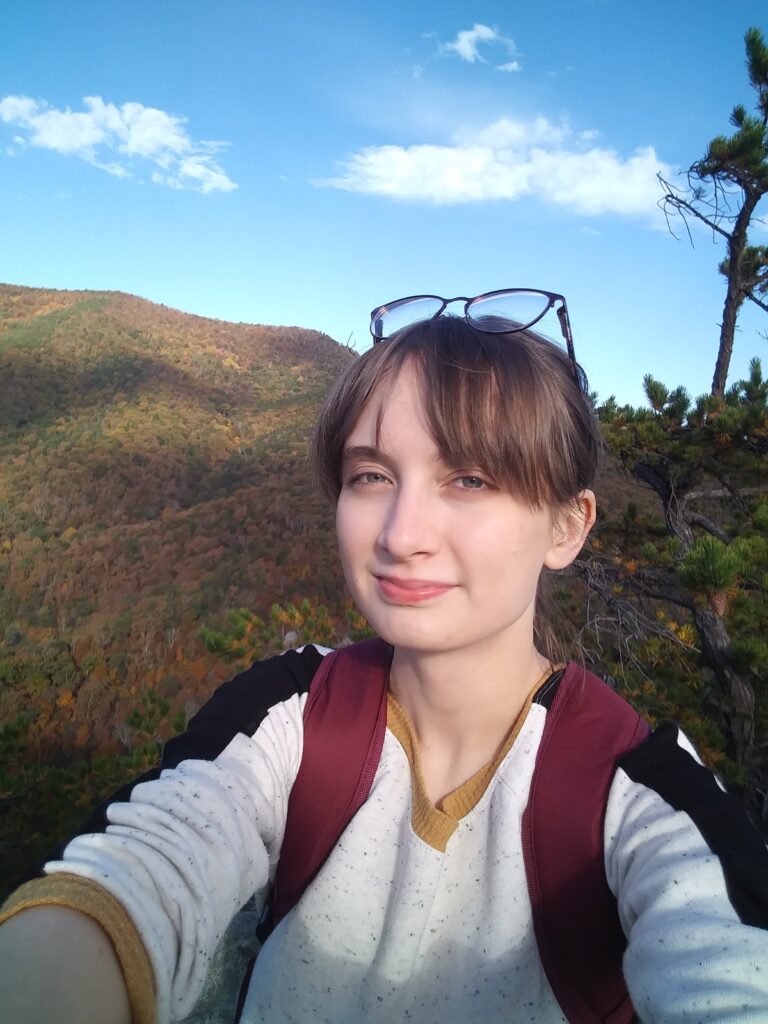
Alisa Shtabnoy (Geology major) was included as a co-author on a USGS data release titled “Hyperspectral profiles of Harmful Algal Blooms (HABs) and other algae” under mentorship from Dr. Natalie Hall (USGS Supervisory Geographer). As part of an internship with the USGS MD-DE-DC Water Science Center, this study collected reflectance measurements (spectral signatures) of various algae which can be used to monitor and detect Harmful Algal Blooms using remote sensing technology. Read more here – Hyperspectral profiles of Harmful Algal Blooms (HABs) and other algae, 2022 – ScienceBase-Catalog
Congratulations Alisa!
For information about any of our programs contact department chair Dr. Jodie Hayob at jhayob@umw.edu.