Varun Makhija
Research:
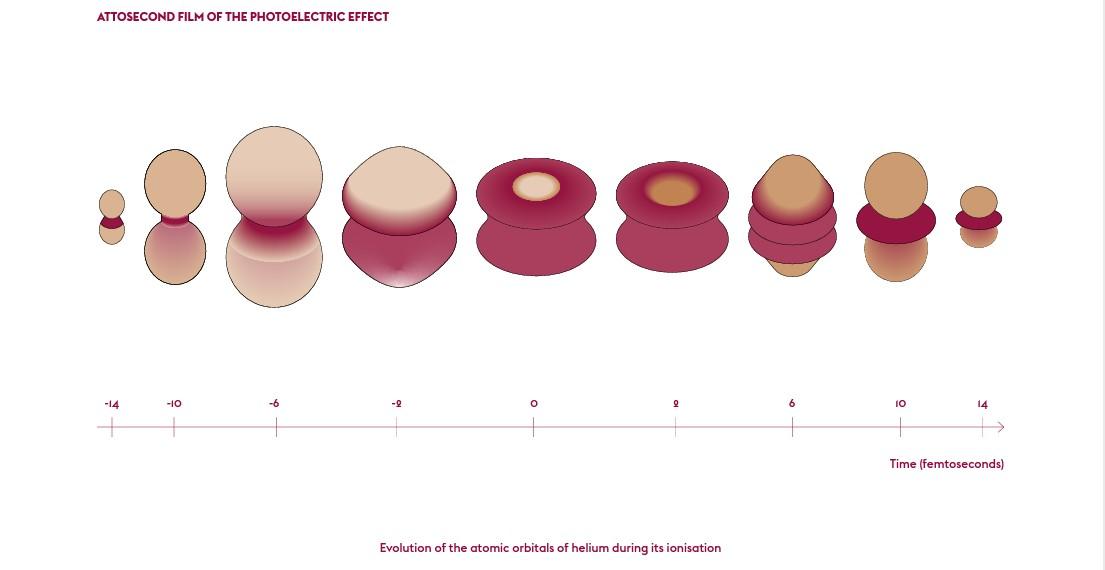
Varun’s research in Ultrafast Molecular Physics focuses on the behavior individual molecules, which are clumps of atoms, when they interact with light. For example, a water molecule, or H2O, is a clump of two Hydrogen atoms and one Oxygen atom. When light lands on such a clump, the electrons in it can literally `soak up’ the light and gain energy. But what happens next? By `next’, we mean what happens within the next few billionths of a billionths of a second? In the next few attoseconds? We know that the energy in the electrons must be transferred to the rest of the molecule since we know that molecules that absorbs light, like those in our eye, can change shape. But the details of this energy transfer remain a mystery.
Varun’s students use quantum mechanics, the part of physics that describes the behavior of really small things, to try and answer this question. They also have the option of working with lasers that produce bursts of light that last for a very short time and can be used as a `camera’ to track the motion of molecules. If you want to learn more about Ultrafast Science, you can read about the 2023 Nobel Prize in physics
Publications:
- UMW student authors in bold
- Morrigan, L., Neville, S.P., Gregory, M., Boguslavskiy, A.E., Forbes, R., Wilkinson, I., Lausten, R., Stolow, A., Schuurman, M.S., Hockett, P. and Makhija, V., 2023. Ultrafast molecular frame quantum tomography. Physical review letters, 131(19), p.193001.
- Gregory, M., Neville, S., Schuurman, M. and Makhija, V., 2022. A laboratory frame density matrix for ultrafast quantum molecular dynamics. The Journal of Chemical Physics, 157(16).
- Howard, A.J., Cheng, C., Forbes, R., McCracken, G.A., Mills, W.H., Makhija, V., Spanner, M., Weinacht, T. and Bucksbaum, P.H., 2021. Strong-field ionization of water: Nuclear dynamics revealed by varying the pulse duration. Physical Review A, 103(4), p.043120.
Student Opportunities:
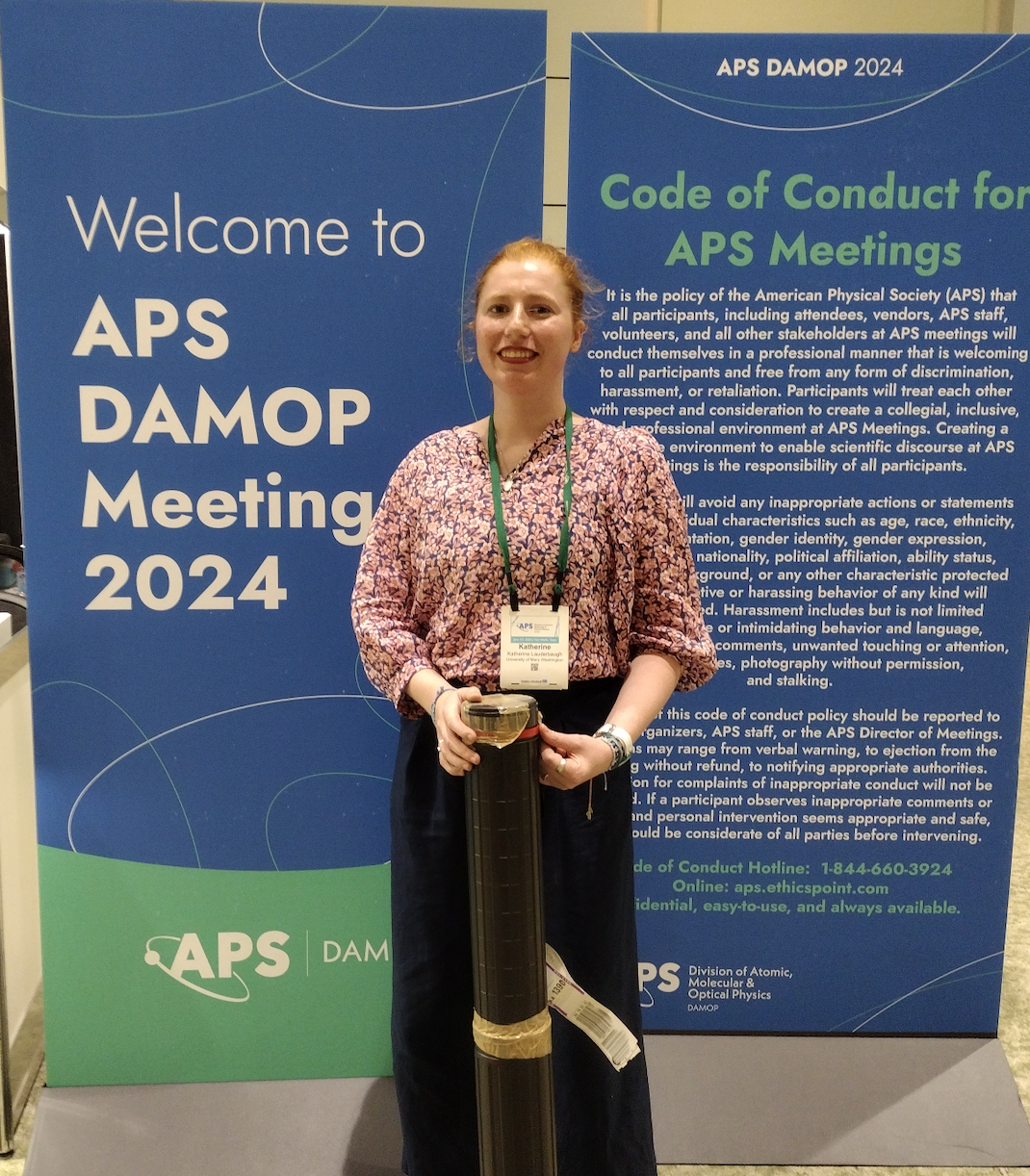
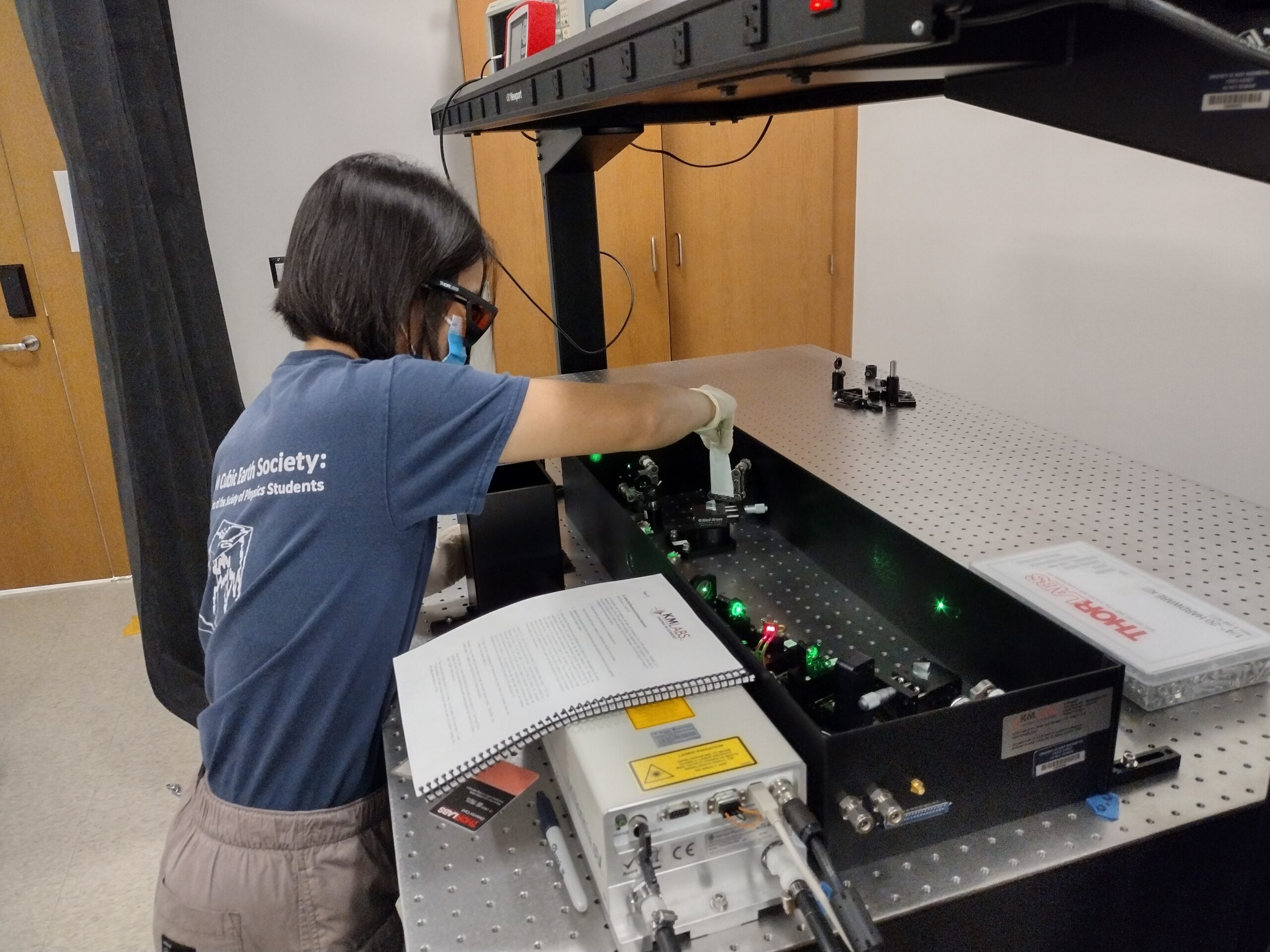
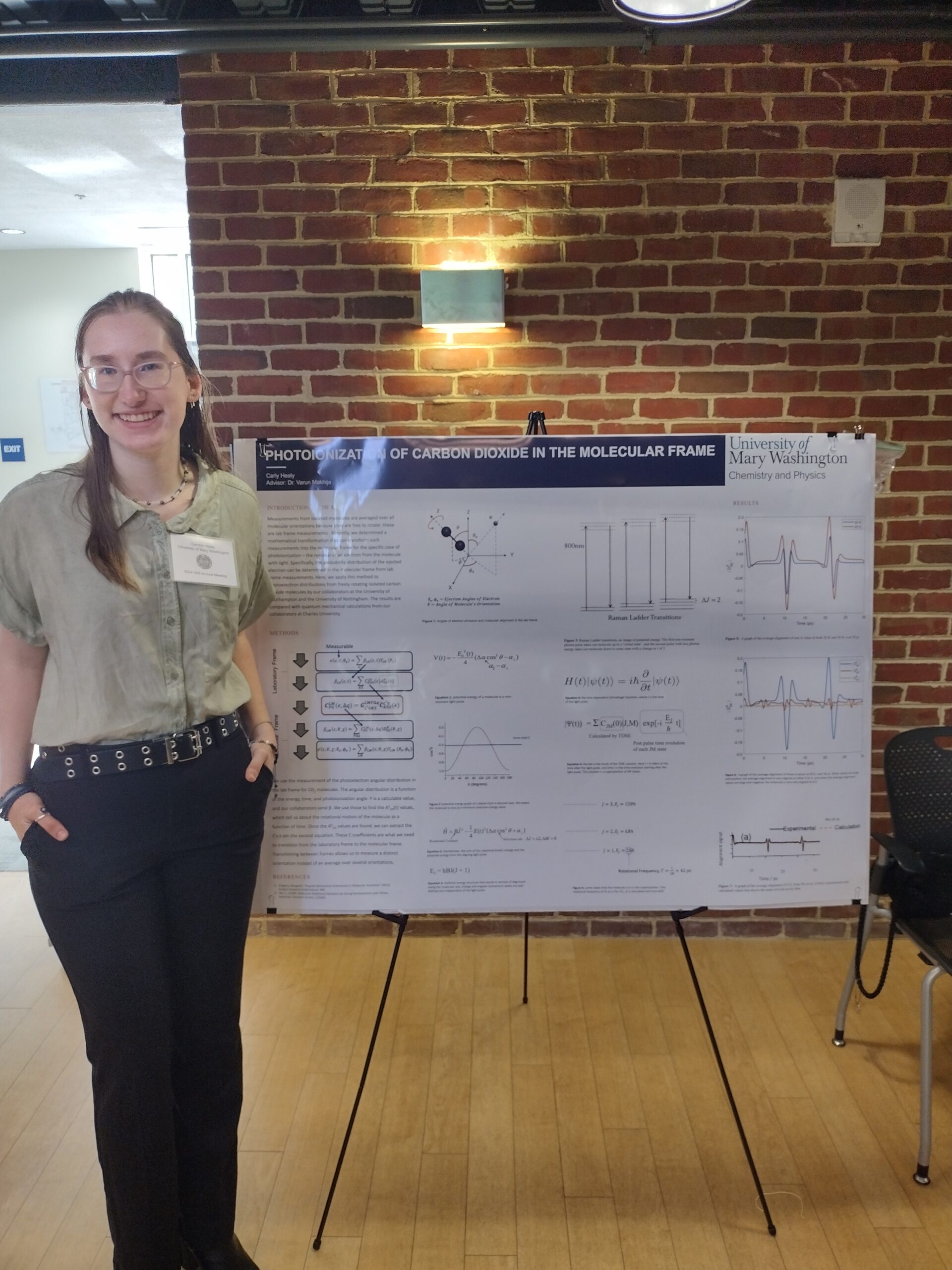
Much of the experimental work occurs in collaboration with other groups at a number of institutions including Purdue University, Stanford University, Kansas State University and Stony Brook University among others. Students can travel to laser labs at these institutions to perform experiments. In addition, Varun’s lab at UMW houses a femtosecond oscillator (laser) that students can get hands-on experience with by signing up during the semester for a URES 197 and Physics 491/492 independent research opportunities. During the summer, UMW’s Irene Piscopo Rodgers ’59 Summer Science Institute (SSI) is another great way to become involved with research. Varun’s students have published peer-reviewed papers and traveled to present their research at professional conferences including the annual meeting of the Division of Atomic, Molecular and Optical Physics (DAMOP) of the American Physical Society.