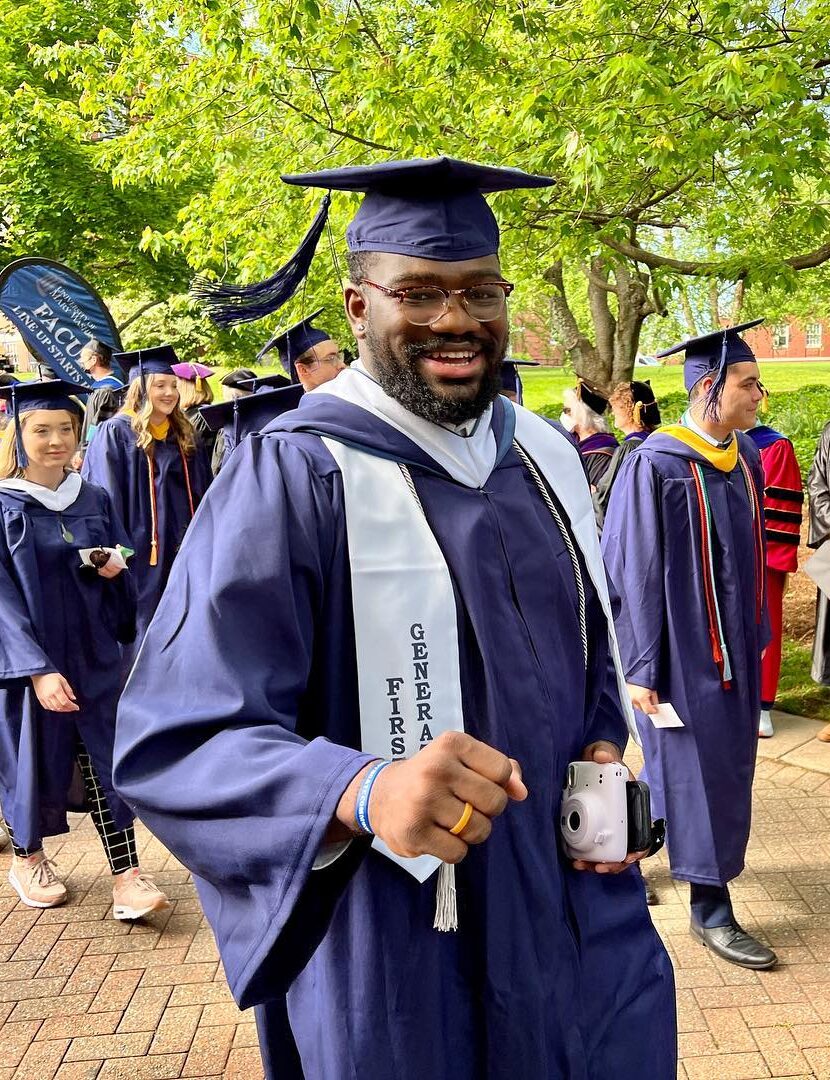
Students who pursue the Communication & Digital Studies Major (CDS) will develop the critical tools to study and use digital technology as they communicate effectively in a dynamic new media environment.
The interdisciplinary major which leads to a Bachelor of Arts degree, provides students with the means to navigate the rapidly changing nature of communication networks and the increasingly digital world in which we live. The coursework in this major helps students understand how communication happens through digital media and how those practices can be adapted to meet their future needs.
Core Competencies
Students completing the Major in CDS develop a number of core competencies that prepare them well for Life after Mary Washington.

Communication
Clearly and effectively exchange information, ideas, facts, and perspectives with persons inside and outside of an organization.

Critical Thinking
Identify and respond to needs based upon an understanding of situational context and logical analysis of relevant information.

Digital Fluency
Gain experience with the tools of digital creation, practice creating content ethically and effectively, and recognize how what you do online impacts your online identity.
What courses will I take?
Practice confident, persuasive communication in Public Speaking, Small Group Communication, and Argumentation. Explore digital media and culture in Intro to Digital Studies and apply digital skills in courses like Video Production, Digital Media Studio, and Creative Coding. Learn about the cultures and rhetoric of Sports, Hip-Hop, Public Health, and the Environment. With electives in Animation, Game Studies, Marketing, and much more, there is plenty to explore.

Required Courses in the CDS Major
The CDS Major is organized into a communication core, a digital studies core, electives, and a required capstone course. These areas are summarized below. More information about specific courses is available in our course descriptions page and the UMW Undergraduate Catalog, and our unofficial schedule overview and archive should assist with planning.
A core of communication-focused classes prepares students to make effective use of their rhetorical skills through speaking, writing, and other media. Students also research the ways that humans create meaning and culture through communication.
COMM 205:
Public Speaking
COMM 206:
Small Group Communication
COMM 340:
Intro to Rhetoric & Communication
COMM 341:
Communication Research Methods
Coursework in Digital Studies centers on understanding digital technology and its role in contemporary society. Students experiment with creative media, critically engage with digital culture, and practice digital methods for advocacy and analysis.
DGST 101:
Intro to Digital Studies
At least one of the following
- ARTS 104: Digital Approaches to Fine Art
- CPSC 106: Digital Storytelling
- CPSC 110: Intro to Computer Science
With an upper-level specialization, students deepen their experience with specific tools, approaches, and concepts by completing at least one of the following.
DGST 395:
Applied Digital Studies
DGST 302:
Creative Coding
DGST 303:
Digital Media Studio
DGST 305:
Intro to Video Production
DGST 310:
Virtual and Augmented Reality
DGST 301:
Special Topics in Digital Studies
The capstone seminar is a culmination of the major in communication and digital studies. Students undertake research that engages with critical and emerging topics in contemporary society.
COMM 460:
Seminar in Digital Rhetoric
The Major in Communication and Digital Studies requires 12 credits in elective courses, many of which can be found in other disciplines. Students are required to complete any four of the following from at least two different disciplines and with at least 6 credits at the 300- or 400-level.
Communication
- COMM 209: Argumentation
- COMM 353: Visual Rhetoric
- COMM 357: Social Media
- COMM 370: Topics in Speech Communication
- COMM 375: Not-For-Profit Communication Campaigns
- COMM 376: Gender & Communication
- COMM 377: Pop Culture
- COMM 378: Health Communication
- COMM 379: Professional Communication
- COMM 380: Sports and the Digital
- COMM 381: Hip-Hop Culture
- COMM 491: Individual Study
- COMM 499: Internship
Digital Studies
- DGST 201: Tinkering, Hacking, & Making
- DGST 301: Special Topics in Digital Studies
- DGST 302: Creative Coding
- DGST 303: Digital Media Studio
- DGST 305: Intro to Video Production
- DGST 310: Virtual and Augmented Reality
- DGST 395: Applied Digital Studies
- DGST 491: Individual Study
- DGST 499: Internship
Journalism
- JOUR 200: News Journalism
- JOUR 300: Investigative Journalism
- JOUR 301: Magazine Journalism
- JOUR 380: Practicum in Journalism (up to 3 credits)
- JOUR 491: Individual Study
- JOUR 499: Internship
Studio Art
- ARTS 104: Digital Approaches to Fine Art
- ARTS 219: Digital Video Production
- ARTS 226: Animation
- ARTS 316: Experimental Documentary
- ARTS 341: Multiple Imaging
- ARTS 454: Approaches to Video Art
Computer Science
- CPSC 106: Digital Storytelling
- CPSC 110: Introduction to Computer Science
- CPSC 350: Applications of Databases
- CPSC 440: Game Programming
- CPSC 444: 3D Computer Graphics
- CPSC 448: Advanced Web Application Development
- CPSC 460: Human-Computer Interaction
English
- ENGL 203: Writing with Digital Media
- ENGL 245: Introduction to Cinema Studies
- ENGL 253: Games & Culture
- ENGL 314: The Literary Journal
- ENGL 317A: Writing & Literacy in the Digital Age
- ENGL 345: Film, Text, & Culture
- ENGL 350: Electronic Literature
- ENGL 386: The Graphic Novel
Historic Preservation
- HISP 303A: Archives & Society
History
- HIST 325: Technology & Culture
- HIST 427: History of the Information Age
- HIST 428: Digital History
Marketing
- MKTG 301: Principles of Marketing
- MKTG 417: Digital Marketing
Music Technology
- MUTC 100: Technology for Musicians
- MUTC 170: MIDI Composition
- MUTC 320: Audio Recording
- MUTC 330: Audio Production
- MUTC 370: Electroacoustic Techniques
Political Science
- PSCI 363: Mass Media Politics
- PSCI 450: US Political Film
What can I do with a degree in Communication & Digital Studies?
CDS graduates go on to work in content production, social media management, education, graphic design, journalism, marketing, and many other fields. They’re working at places like the Library of Congress, Major League Baseball, and other top employers. Many grads go on to pursue advanced degrees, opening the door to even more possibilities.