Conservation Biology Major
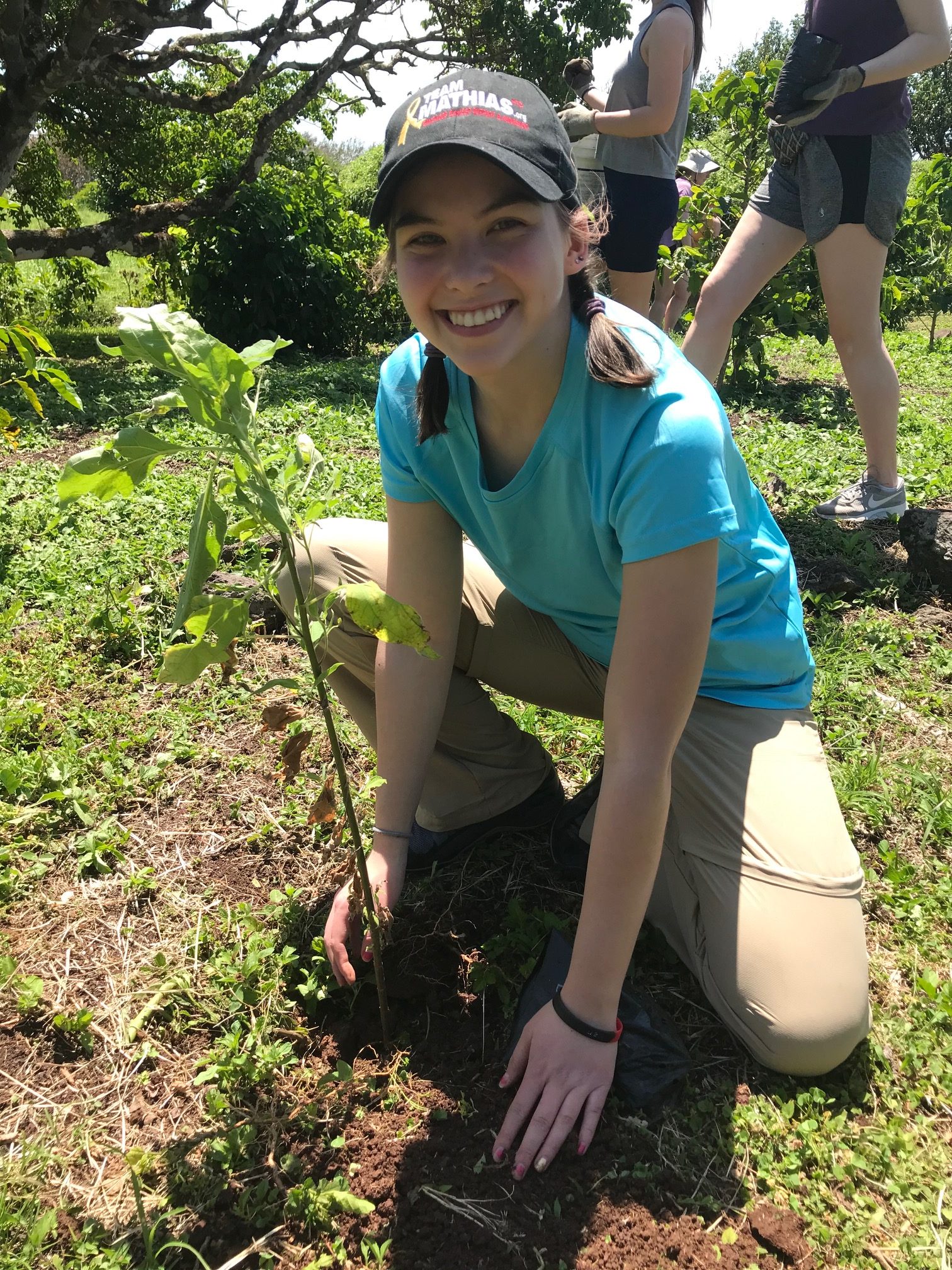
The Conservation Biology Major leads to a Bachelor of Science degree in Biology. The Conservation Biology major is designed for students interested in public or private-sector careers in fields such as endangered species protection and recovery, habitat conservation, conservation biology education, and fisheries and wildlife management. Additionally, it prepares students for graduate study in conservation biology in cases where graduate degrees are required for particular careers. Students have the option to spend a semester in residence at the Smithsonian Conservation Biology Institute with the Smithsonian – Mason School of Conservation (SMSC). Earn transferable course credit, while working side-by-side with world-class conservation biologists. Students who complete all requirements earn the degree of Bachelor of Science (B.S.) in Biology with a major in Conservation Biology.
For complete description of all courses offered by the Department of Biological Sciences, please see UMW Course Catalog, Biology.
Course Requirements
Forty (41) credits. These must include the following required and elective courses:
| Required Core (18 credits) | Credits | Frequency of offering* |
| BIOL 126 or 132, Organism Function and Diversity | 4 | Spring |
| BIOL 210, Introduction to Ecology and Evolution | 3 | Fall & spring |
| BIOL 260, Biostatistics and Research Design | 3 | Fall & spring |
| BIOL 341, General Genetics | 4 | Spring |
| One GIS course, from the following: | Credits | |
| GISC 200, Introduction to GIS | 4 | Fall & spring |
| GEOG 250, Introduction to Geographic Information Systems and Cartography | 4 | Fall & spring |
| EESC 205, GIS Applications in Environmental Science and Geology with Lab | 4 | Fall |
| One course from the following: | Credits | |
| BIOL 428, Conservation Biology | 4 | |
| CONS 402, Applied Conservation | 4 | |
| CONS 404, Biodiversity Monitoring | 4 | |
| CONS 491, Conservation Management Planning | 4 | |
| One public policy, economic, and cultural perspectives course: | Credits | |
| ANTH 365, Environment and Development Narratives: The Modern Myths of Nature and Progress | 3 | |
| ECON 331A, Environmental and Resource Economics | 3 | |
| EESC 230, Global Environmental Problems | 3 | |
| EESC 330, Environmental Regulations Compliance | 3 | |
| GEOG 245 Environment and Society | 3 | |
| HIST 322, US Environmental History | 3 | |
| PHIL 330, Environmental Ethics | 3 | |
| CONS 410, Human Dimensions of Conservation | 3 | |
| SOCG 354, Environmental Sociology | 3 | |
| SOCG 456, Environmental Justice | 3 | |
| Students must take a minimum of 15 credits from all of the following categories: | Credits | |
| Select at least two of the following diversity courses: | 4 | |
| BIOL 231, Plant Biology | 4 | |
| BIOL 313, Natural History: Observing Plants from Individuals to Ecosystem | 4 | |
| BIOL 321, Invertebrate Zoology | 4 | |
| BIOL 323, Entomology | 4 | |
| BIOL 372, Parasitology | 4 | |
| BIOL 425, Vertebrate Zoology | 4 | |
| BIOL 426, Biology of Fishes | 4 | |
| BIOL 427, Ornithology | 4 | |
| BIOL 444, Bioinformatics | 3 | |
| BIOL 471, Special Topic in Biology1 | 2-4 | |
| Select at least one upper level ecology course: | ||
| BIOL 311, Plant Ecology | 4 | |
| BIOL 322, Animal Ecology | 4 | |
| BIOL 401, Animal Behavior | 3 | |
| BIOL 423, Ecology and Evolution in the Galapagos Islands | 4 | |
| BIOL 424, Tropical Ecology | 4 | |
| BIOL 471, Special Topics in Biology1 | 2-4 | |
| CONS 405, Landscape and Macrosystems Ecology | 4 | |
| CONS 406, Small Population Management | 4 | |
| Select at least one Research Intensive (RI) course or sequence | Credits | |
| BIOL 427, Ornithology | 4 | |
| BIOL 445,Research Practices in Aquatic Ecology | 4 | |
| BIOL 462, Research Practices in Plant Ecology | 4 | |
| BIOL 472, Research-Intensive Topics in Biology1 | 4 | |
| BIOL 481 & BIOL 491, Research Design & Proposal Development in Biology and Special Problems in Biology 1 | BIOL 481 – 1 BIOL 491 – 4 to 6 | 4 |
Select additional electives to meet 41 total credits | Credits | |
| BIOL 499, Internship1 | ||
| BIOL 416, Vertebrate Endocrinology | 3 | |
| CONS 400, Conservation Seminar | 2 | |
| EECS 357, Sustainable Aquaculture | 3 | |
| EECS 418, Applied Ecotoxicology | 4 | |
| GEOG 241, Biogeography | 3 | |
| GEOG 327, Climate Change | 3 | |
| Pre-requisites | Credits | |
| BIOL 121, Biological Concepts | 4 | Fall |
| CHEM 111, General Chemistry I | 4 | Fall, Spring |
| CHEM 112, General Chemistry II | 4 | Fall, Spring |
*Prevailing course availability. Exceptions may occur. Students should consult with their academic advisors when developing their degree completion plans.
1 Requires Departmental Approval
Undergraduate Research
Outstanding students have the opportunity to participate in undergraduate research projects. Working with a faculty mentor, each student explores the literature, defines an original research problem, and utilizes the appropriate research and analytical techniques to investigate the problem. On many occasions this work results in presentations at state, regional, and national scientific meetings.
Research students who meet minimum requirements (3.0 overall GPA and a 3.25 average in biology) may pursue Honors in Biology by writing and defending a thesis on their research project. Students can also gain focused research experience via participation in the UMW Summer Science Institute. Financial support for student research is available. Additionally, biology faculty offer research opportunities through the university’s undergraduate research (URES 197 Undergraduate Research) program.
Internships and Service Learning
Majors can gain career experience and define career goals through the University’s internship program. The biology service learning option (BIOL 000) requires students to apply knowledge and skills acquired in their formal courses and to reflect upon how such application has augmented their education.
Students will complete a service-learning contract in which they will:
- identify the agencies for which they will conduct their service,
- indicate the biology faculty members who will evaluate the academic component of their activities, and
- describe the duties that they will carry out for these agencies.
Students must complete 40 hours of service within 12 months of submitting their contracts. Students completing their community service during their last semester must complete all requirements by March 1 (November 1 for those finishing in December). Contact the biology department chair for additional details.
See Dr. Griffith for questions about the major and about applying for SMSC.
See Conservation Biology Major Curriculum
See the UMW Course Catalog Description of the Conservation Biology Major